


AI Agents: Introduction and Practical Projects
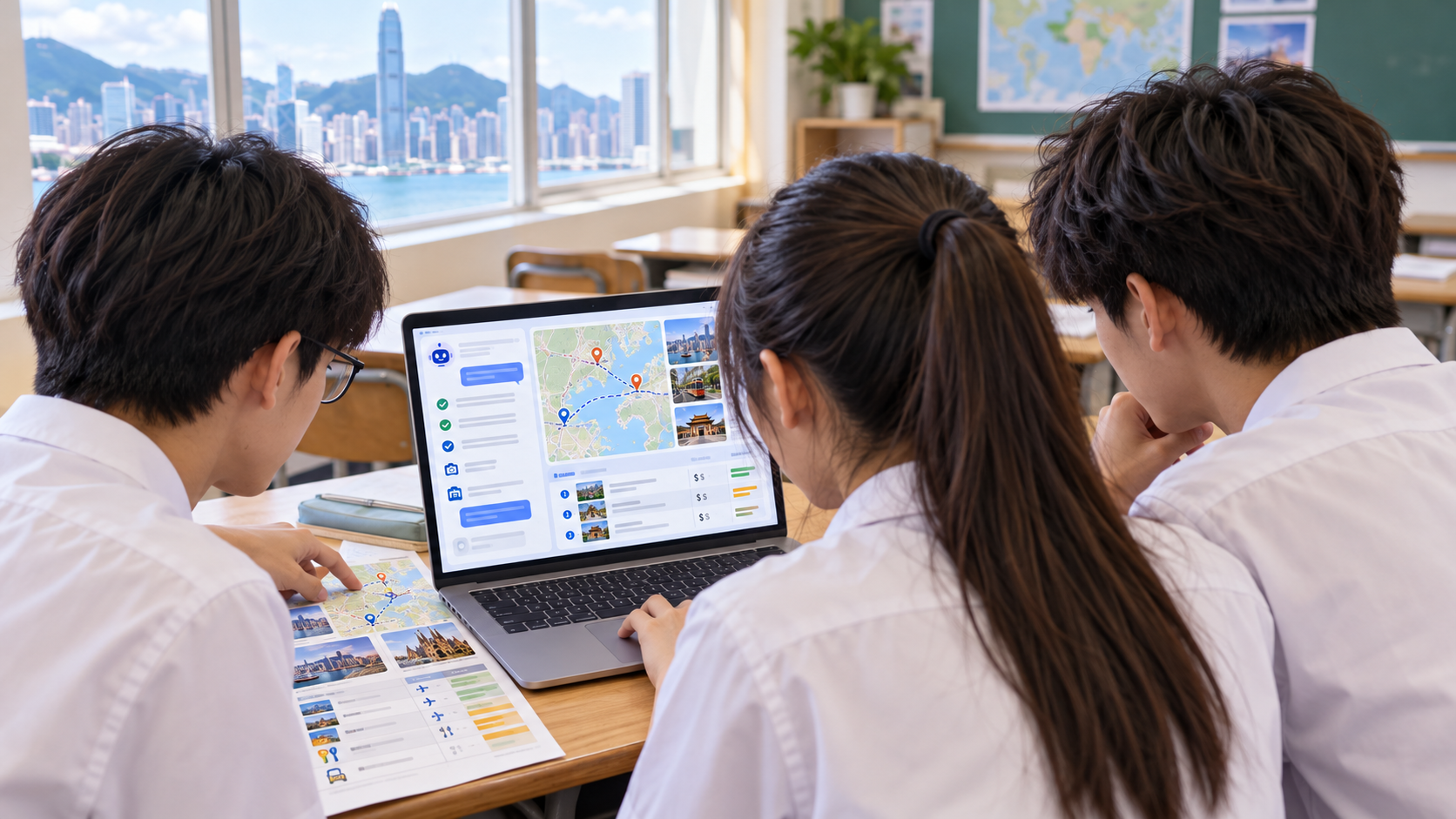
Junior and senior secondary students use DeepSeek Harness to plan a Hong Kong day trip and an overseas trip with AI Agents. They learn to break down tasks, verify information, compare budgets and present their work, developing independent judgement and problem-solving skills. No coding experience required.
Level
Junior Secondary, Senior Secondary
Course Topics
AI, Project-based Learning
Course Length
10 sessions of 1 hour each (10 hours in total)
Learning Objectives
By the end of the course, students will be able to:
Understand how AI Agents work: explain how AI uses tools, works with files and carries out instructions, and identify which results need human checking.
Break a larger task into manageable steps: set clear requirements for research, budgeting, scheduling and presenting findings, then work towards a complete project plan.
Check and improve results using evidence: describe a problem, request a specific change and check whether the result meets their expectations.
Verify information and record sources: check prices, opening hours and transport details, distinguishing confirmed information from estimates and claims that still need checking.
Use data to make decisions: compare budgets and options, check calculations, pricing units and scheduling clashes, and explain their choices.
Organise and present their work: produce a clear itinerary and explain how they checked it, what they corrected and which questions remain unresolved.
Course Outline
Trip planning connects the activities throughout this course. Using DeepSeek Harness, students explore how AI Agents can help them complete a series of related tasks. They begin with a Hong Kong day trip, then apply the same research, budgeting and planning methods to a simulated overseas trip, gradually building a complete project.
The course covers the following areas. The depth of the activities and project requirements can be adapted to students' abilities:
Getting to know AI Agents: explore how AI uses tools, works with files and carries out tasks in several steps, while understanding the role of human judgement and responsibility.
Breaking down a project and setting goals: divide trip planning into research, comparing options, budgeting and scheduling, with clear requirements for each task.
Giving clear instructions and resolving problems: describe goals, constraints and expected results, ask AI to make changes based on what they observe, and check whether those changes work.
Gathering and organising information: use AI to help research attractions, food, transport and accommodation, then organise the findings for comparison.
Checking sources and spotting errors: verify prices, dates and opening hours, investigate conflicting information, and clearly label estimates and unconfirmed details.
Comparing budgets and making choices: check pricing units, quantities and totals, weigh the cost and value of different options, and explain the reasons for their decisions.
Building a workable itinerary: allow time for activities, travel and meals, check for scheduling clashes, and recognise the additional information that overseas planning requires them to verify.
Responding to changes and refining the plan: consider weather, delays and price changes, propose adjustments, and check that the revised itinerary and budget still agree.
Bringing the work together and reflecting on it: complete the itinerary, present supporting sources and corrections, and explain errors they found, how they found them and what still needs checking.
What students produce
Itineraries for a Hong Kong day trip and a simulated overseas trip, including schedules, budgets and sources.
A record of the information they checked and the corrections they made during the project.
A presentation and individual reflection that help teachers understand the reasoning behind students' choices and corrections.
Course Requirements
Suitable for junior and senior secondary students. No coding experience is required. Students should have basic computer skills, such as opening and saving files, using a browser and typing.
Research and planning activities use simulated travel scenarios. Students do not make real bookings or payments. They also learn to protect personal information when using AI.